Congress is closer than ever to banning Chinese cars from American roads. A bipartisan bill that would block the sale of vehicles built with parts from China and Russia has won the backing of the auto industry, and its sponsors say the deal is nearly done.
The bill is called the Connected Vehicle Security Act. It is led by Senator Bernie Moreno of Ohio, a Republican, and Senator Elissa Slotkin of Michigan, a Democrat. The two hope to pass it by a voice vote in the Senate in December, and they are working with colleagues in the House to move it quickly there too.
The bill matters even though you almost never see a Chinese car on an American road today. It is about what happens next, and about who builds the cars Americans will drive in the years to come.

Photo: User3204, Wikimedia Commons (CC BY-SA 4.0) — A BYD e6 electric car, made by the Chinese carmaker BYD.
Why Does Congress Want to Ban Chinese Cars?
Lawmakers say the main concern is security. Modern cars are computers on wheels. They carry cameras, sensors, and software that can collect and send data. A car built with parts from a foreign adversary, the argument goes, could be used to gather information about American drivers and American roads.
There is also a simple economic argument. Chinese carmakers, led by BYD, have grown fast around the world. In the first eight months of 2026, the European Union imported more than 1.1 million vehicles from China, more than in all of 2025. American carmakers and unions say they want the United States market protected before cheap Chinese electric cars arrive here the way they arrived in Europe.
What Would the Bill Actually Do?
The bill would ban the sale of cars in the United States that are made with components from countries the government calls foreign adversaries, including China and Russia. It passed the Senate Commerce Committee back in July. Since then, the sponsors have been rewriting parts of it to win over car companies that had worries about the first version.
Here are a few key points to keep in mind:
- The ownership rule was softened. The first version would have banned cars from companies more than 15 percent owned by Chinese investors. That would have caught Volvo, which is about 80 percent Chinese-owned, and Mercedes-Benz, which is about 20 percent Chinese-owned. The new version gives more flexibility to companies with silent shareholders, so neither brand would be blocked.
- Batteries are left out of the ban. The rules will cover only battery management systems, not the batteries themselves. That means Ford can go ahead with its deal to license battery technology from the Chinese battery maker CATL.
- The ban would not last forever. Lawmakers added a sunset clause, so the restrictions will expire unless Congress decides to keep them. That was a response to lawmakers who worried that shutting out low-cost Chinese electric cars could slow the move to cleaner, cheaper driving.
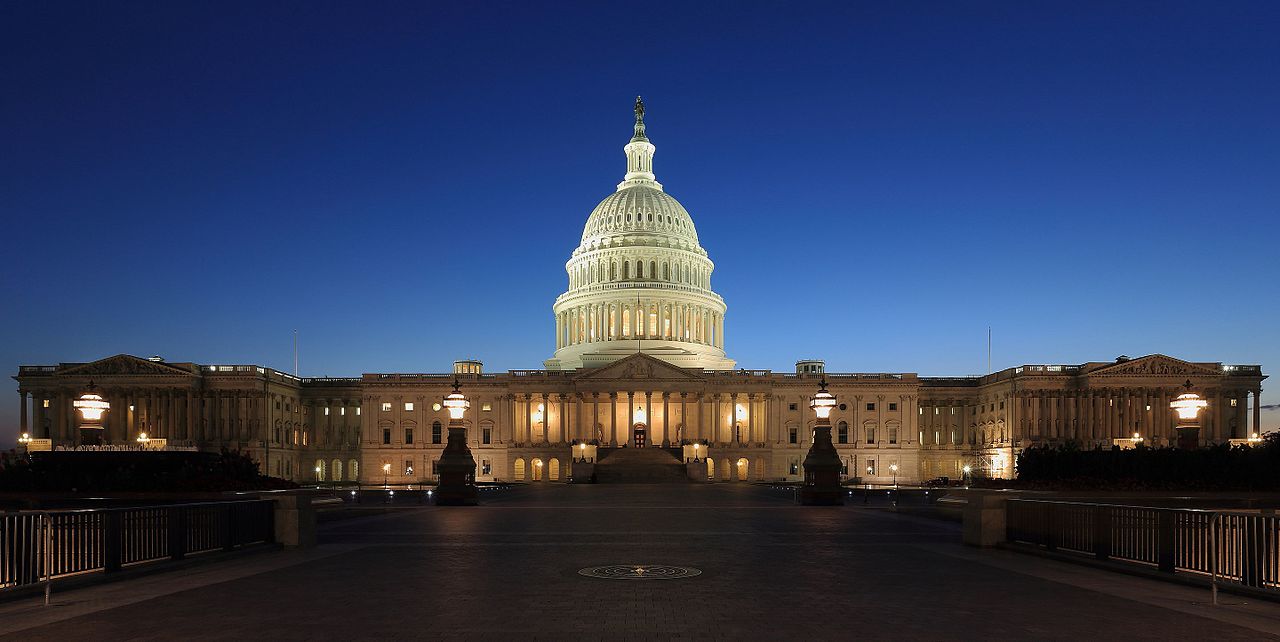
Photo: Martin Falbisoner, Wikimedia Commons (CC BY-SA 3.0) — The United States Capitol in Washington, D.C., at dusk.
What Does This Mean for Everyday Car Buyers?
In the short term, almost nothing will change at the dealership. Chinese cars are already kept out of the United States by steep 100 percent tariffs and by Commerce Department rules on car parts. Prices and choices stay the same for now, because there are no Chinese cars on sale to miss.
The longer-term effect is about choice and price. Supporters of the bill say it protects American jobs and keeps the software in your car safe. Critics say it could also mean fewer cheap electric cars for American buyers in the future. The sunset clause is the compromise: the ban stays in place for now, but it is not locked in forever.

Photo: Marek Ślusarczyk, Wikimedia Commons (CC BY 3.0) — A car factory assembly line.
How Close Is the Bill to Becoming Law?
Very close, by Washington standards. Senate leaders from both parties have signaled support, and Majority Leader John Thune helped move the bill out of committee earlier this year. The House version already has more than 100 co-sponsors. One person close to the talks described the bill as being at the "one yard line," meaning the hard part is done and only the final wording is left.
A voice vote still needs every senator to agree, so winning over the last holdouts matters. Senator Rand Paul of Kentucky had objected that the bill singled out Mercedes, and Senator Katie Britt of Alabama represents a state with a Mercedes plant. Getting them on board is key to passing the bill before Congress runs out of time at the end of the year. The Alliance for Automotive Innovation, which speaks for General Motors, Ford, Stellantis, Mercedes, Volvo, Toyota, and Volkswagen, says it is "very supportive." The Teamsters union, with 1.3 million members, has also urged Congress to pass it quickly.
There is one wrinkle. President Donald Trump has mused about letting Chinese car companies build plants and sell cars in the United States. Congress is moving the other way. For now, the bill's backers say they are "basically done," and if December goes as planned, the ban on Chinese cars could become law before the year ends. Would you buy a Chinese car if it were cheaper than the rest, or does the security argument win you over?
Comments
Post a Comment